Red Velvet Cake with Cream Cheese Frosting
 Prep: 30 MinutesCook: 30 Minutes
12 servings
 Intermediate
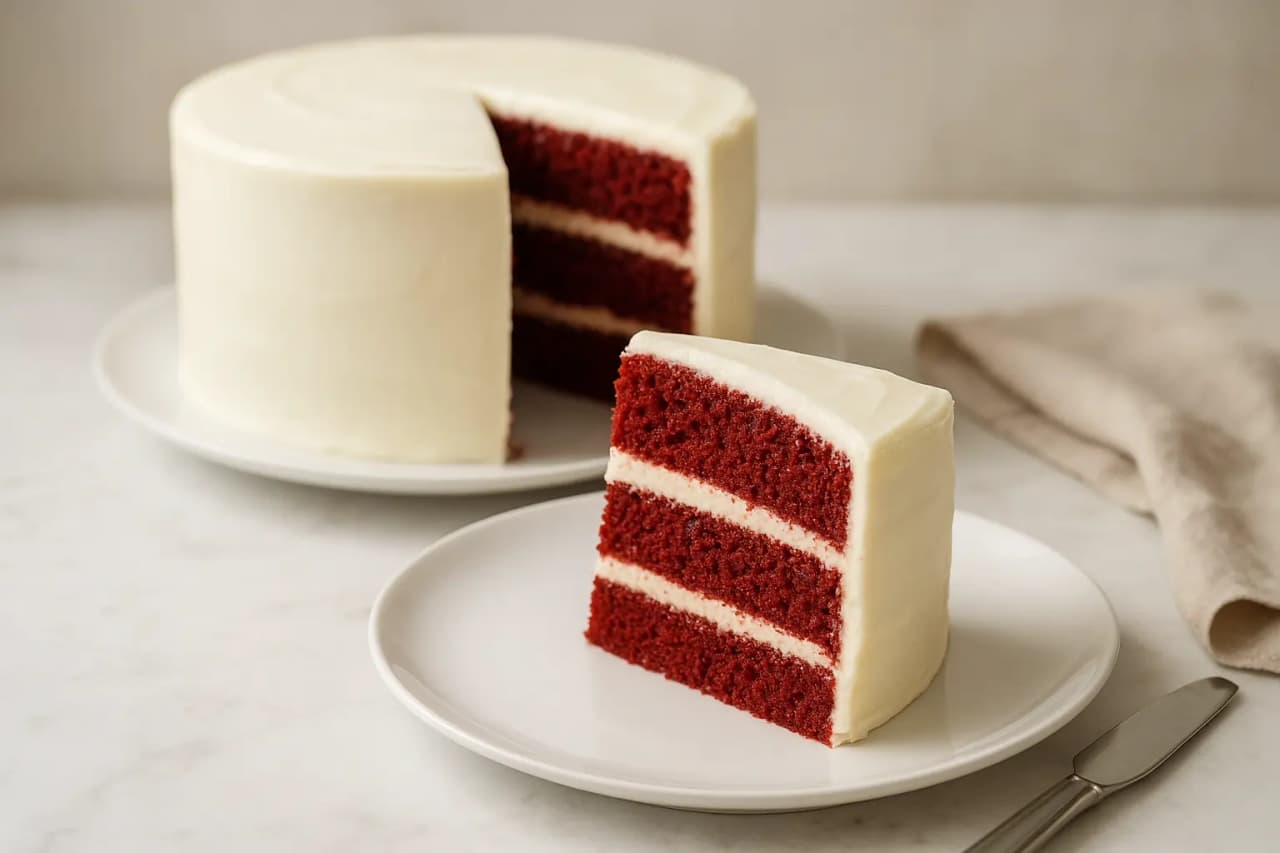
Red Velvet Cake with Cream Cheese Frosting is a luxurious vanilla–cocoa layer cake with a silky, tender crumb and tangy cream cheese frosting. This red velvet cake recipe uses buttermilk, oil, and a touch of cocoa for a moist texture that stays soft for days. Perfect for holidays, birthdays, and special occasions, it’s ideal for layering, decorating, and making ahead.
Calories: 530 kcalProtein: 6 gCarbs: 57 gFat: 31 g
Prep30 Minutes
Bake30 Minutes
Servings12
DifficultyIntermediate
Ingredients
Baker's Essentials for this Recipe
Shop the gear that makes this recipe easier to bake.
Steps
- Preheat the oven to 175°C (350°F). Grease two 20 cm (8-inch) round cake pans, line the bases with parchment paper, and lightly grease the parchment.
- Bring the eggs, buttermilk, cream cheese, and unsalted butter to about 20–22°C (68–72°F) so they mix smoothly and evenly into the batter and frosting.
- Brew the coffee, then let it cool to about 20–22°C (68–72°F). In a small jug, stir the cooled coffee into the buttermilk and set aside.
- In a medium bowl, whisk together the all-purpose flour, unsweetened cocoa powder, baking powder, baking soda, and 4 g fine sea salt until the mixture looks uniform with no visible streaks of cocoa or flour.
- In a large mixing bowl, whisk the granulated sugar and neutral vegetable oil until well combined and slightly thickened, about 1–2 minutes.
- Whisk in the eggs one at a time until the mixture is smooth and slightly more pale. Add 8 ml (about 1½ teaspoons) of the vanilla extract, the red food coloring, and the white vinegar, whisking until the color is evenly distributed and the batter looks glossy.
- Add the dry ingredients to the wet mixture in three additions, alternating with the buttermilk–coffee mixture in two additions (dry-wet-dry-wet-dry). Use a spatula or whisk on low speed, mixing just until a smooth, slightly thick but pourable batter forms with no dry pockets of flour; avoid overmixing so the crumb stays tender and fluffy.
- Divide the batter evenly between the prepared pans and smooth the tops with a spatula so the layers are level and of similar thickness.
- Bake at 175°C (350°F) for 25–30 minutes, rotating the pans once halfway through, until the tops are matte and lightly domed, the edges just start to pull away from the sides of the pans, the centers spring back softly when gently pressed, and a toothpick inserted into the center of each layer comes out with a few moist crumbs but no wet batter.
- Transfer the pans to a wire rack and let the cakes cool in the pans for 15 minutes. Then carefully run a thin knife around the edges, turn the layers out, peel off the parchment, and place the cakes right-side up on the rack to cool until they reach about 20–22°C (68–72°F). The layers should feel soft, moist, and fully set.
- While the cakes cool, make the cream cheese frosting. In a large bowl, combine the cream cheese and unsalted butter, both at about 20–22°C (68–72°F). Beat with a hand mixer or stand mixer on medium speed for 2–3 minutes, until completely smooth, silky, and free of lumps.
- Add the powdered sugar in 2–3 additions, mixing on low speed after each addition until incorporated, then increasing to medium speed. Continue beating for another 2–3 minutes until the frosting looks thick, creamy, and slightly fluffy with no grainy sugar texture.
- Add the remaining 5 ml (about 1 teaspoon) of vanilla extract, the remaining 1 g fine sea salt, and the heavy cream. Beat on medium-high speed for 1–2 minutes until the frosting becomes very light, smooth, and spreadable, holding soft peaks that keep their shape without sliding.
- To assemble, place one cooled cake layer on a serving plate. Spread a generous, even layer of cream cheese frosting over the top, creating a smooth cushion that reaches the edges. Set the second layer on top, bottom-side down, aligning the edges.
- Apply a thin crumb coat of frosting over the top and sides of the cake, smoothing it to seal in any loose crumbs, and chill the cake for about 15–20 minutes until the frosting layer feels slightly firm to the touch.
- Finish with a thicker layer of frosting over the top and sides, swirling or smoothing as desired. The finished cake should have a velvety, moist crumb, distinct red color contrasted with the white frosting, and slices that hold their shape cleanly while tasting soft, tender, and lush.