Coconut Cake with Toasted Coconut
 Prep: 25 MinutesCook: 30 Minutes
12 servings
 Intermediate
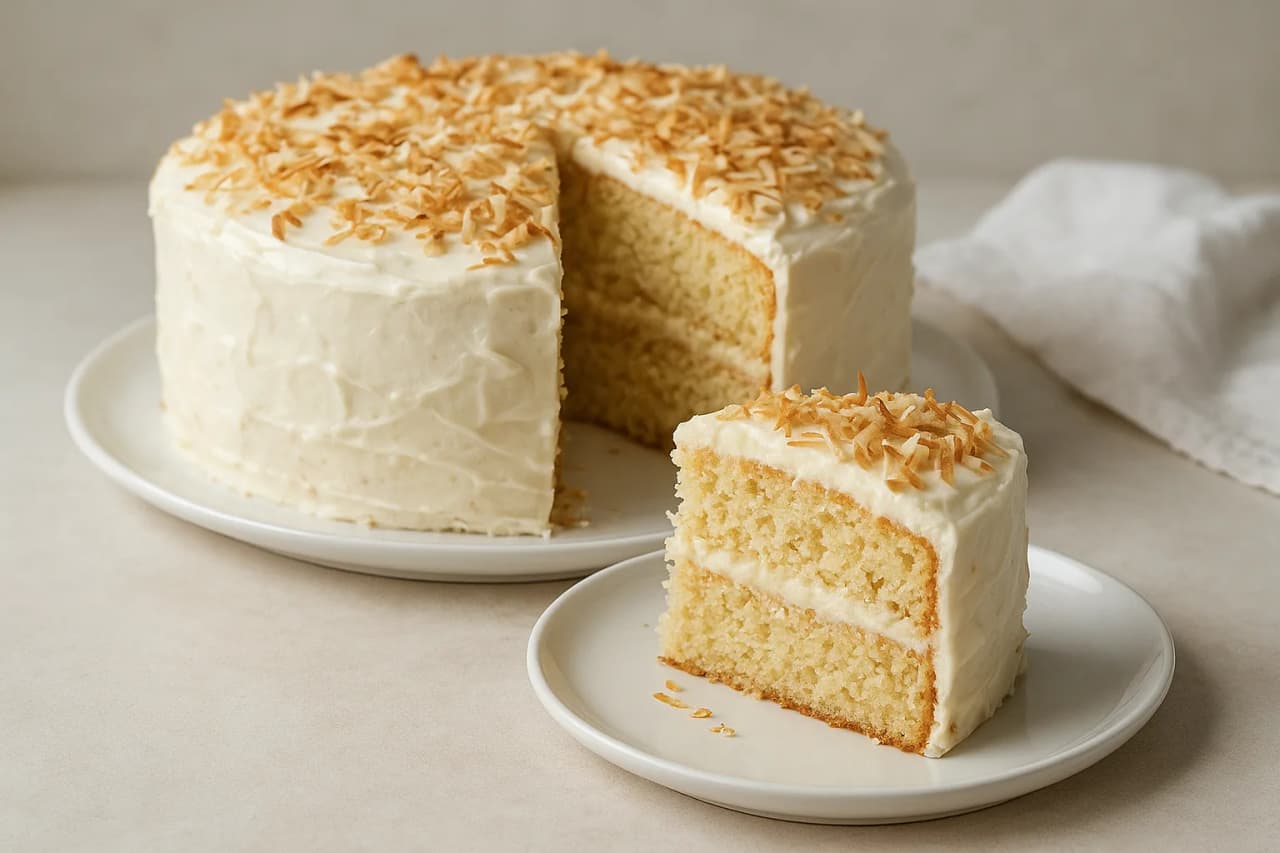
This Coconut Cake with Toasted Coconut is a light, tropical dessert with a moist, tender crumb and fluffy coconut frosting. Real coconut milk, shredded coconut, and vanilla create rich flavor, while golden toasted coconut flakes add crunch and aroma. Perfect as a coconut cake for parties, holidays, or everyday baking, this easy, bakery-style recipe is naturally vegetarian and irresistibly soft and fluffy.
Calories: 520 kcalProtein: 5 gCarbs: 63 gFat: 30 g
Prep25 Minutes
Bake30 Minutes
Servings12
DifficultyIntermediate
Ingredients
Baker's Essentials for this Recipe
Shop the gear that makes this recipe easier to bake.
Steps
- Preheat the oven to 175°C (350°F). Grease a 23 cm (9-inch) round cake pan, line the bottom with parchment paper, and lightly grease the parchment.
- Spread the coconut flakes in an even layer on a small baking tray. Toast in the preheated oven for 5–8 minutes, stirring once, until light golden and fragrant. Watch closely to avoid burning. Set aside to cool completely.
- In a medium bowl, whisk together the all-purpose flour, baking powder, and 3 g of the fine salt until evenly combined and lump-free.
- In a large mixing bowl, beat 120 g of the unsalted butter at 20–22°C with the granulated sugar for 3–4 minutes, until very pale, creamy, and fluffy with a lighter texture.
- Add the eggs one at a time, beating well after each addition and scraping down the sides of the bowl. The mixture should become smooth, slightly thickened, and glossy with no visible streaks of egg.
- Measure 180 ml of the coconut milk into a small jug and whisk in 10 ml of the vanilla extract until combined. Ensure this mixture is at about 20–22°C.
- Add one-third of the dry ingredients to the butter mixture and mix on low just until incorporated. Add half of the coconut milk mixture and mix briefly. Repeat with another third of the dry ingredients and the remaining coconut milk mixture, finishing with the last third of the dry ingredients. Mix only until a smooth, thick, creamy batter forms with no dry flour pockets to keep the crumb soft and tender.
- Fold the shredded coconut gently into the batter until evenly distributed. The batter should be thick, smooth, and slowly pourable with visible coconut flecks throughout.
- Scrape the batter into the prepared pan and smooth the top into an even layer so the cake bakes level.
- Bake for 28–32 minutes at 175°C (350°F), until the top is lightly golden, the edges just begin to pull away from the pan, the center springs back when gently pressed, and a toothpick inserted in the center comes out clean or with a few moist crumbs but no wet batter.
- Place the pan on a wire rack and let the cake cool in the pan for 10–15 minutes. Then carefully turn it out, remove the parchment, and cool completely on the rack to 20–22°C before frosting so the topping does not melt.
- For the coconut frosting, place the remaining 150 g unsalted butter at 20–22°C in a clean bowl with the remaining 1 g fine salt. Beat for 1–2 minutes until smooth, creamy, and slightly paler.
- Gradually add the powdered sugar while mixing on low speed, then increase to medium and beat for 2–3 minutes until the frosting is thick, light, and fluffy.
- Add the remaining 30 ml coconut milk and the remaining 5 ml vanilla extract to the frosting. Beat for another 1–2 minutes until the frosting is very smooth, airy, and easily spreadable, holding soft peaks without feeling stiff or greasy.
- Place the completely cooled coconut cake on a serving plate. Spread the coconut frosting generously over the top and, if desired, lightly down the sides, creating soft swirls for a fluffy, cloudlike finish.
- Sprinkle the cooled toasted coconut flakes evenly over the top of the frosted cake, pressing very gently so they adhere without compressing the frosting. The finished cake should have a moist, tender, soft crumb with distinct coconut aroma, a light and fluffy frosting, and a crisp, golden toasted coconut topping for gentle crunch and visual contrast.
- Slice with a sharp knife, wiping the blade between cuts for clean slices. Serve at room temperature (20–22°C) for the best flavor and texture.