Brioche Bread (Rich & Buttery)
 Prep: 2 Hours 30 MinutesCook: 30 Minutes
12 servings
 Intermediate
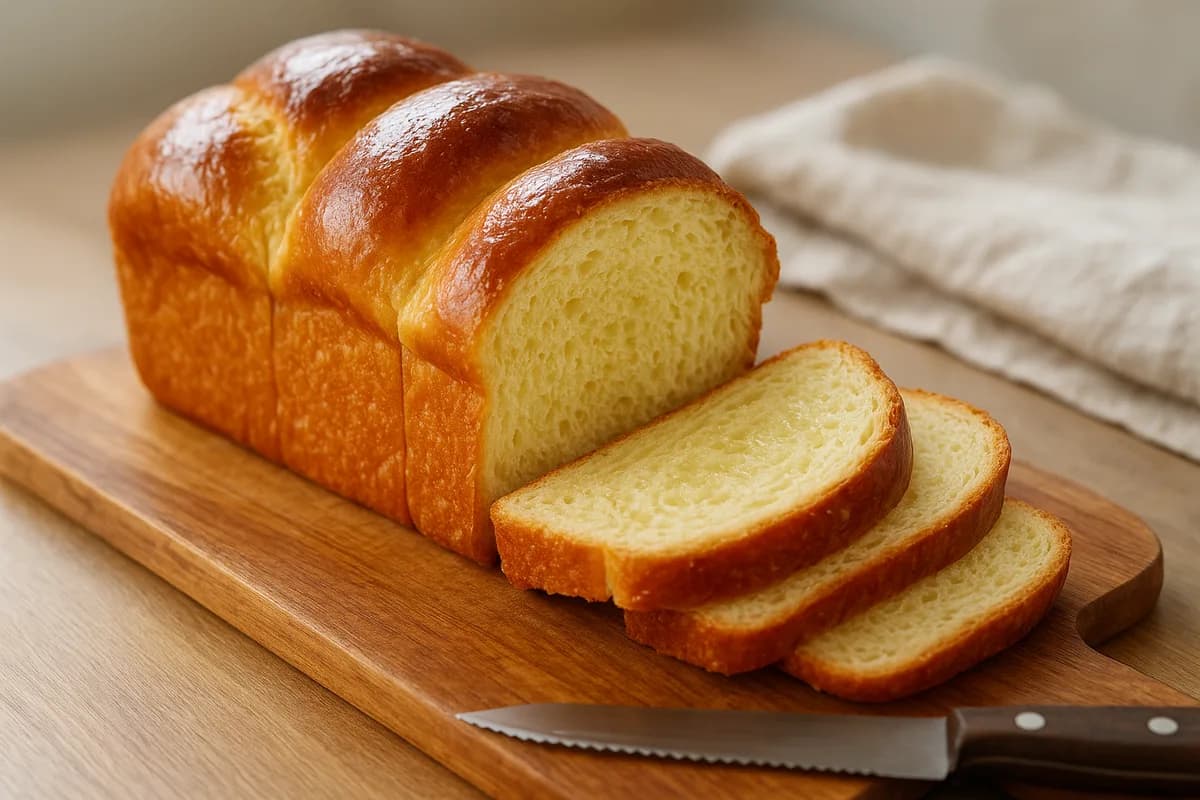
Rich and buttery, this classic Brioche Bread is made with eggs, milk, and real butter for an ultra-soft, pull-apart crumb. This bakery-style brioche recipe is perfect for breakfast toast, French toast, or snacking straight from the loaf. An approachable brioche recipe for home bakers, it walks you through working with enriched dough so you get tender, golden, bakery-quality buttery bread every time.
Calories: 260 kcalProtein: 5 gCarbs: 31 gFat: 13 g
Prep2 Hours 30 Minutes
Rise/Proof2 Hours 50 Minutes
Bake30 Minutes
Servings12
DifficultyIntermediate
Ingredients
Baker's Essentials for this Recipe
Shop the gear that makes this recipe easier to bake.
Steps
- In a small saucepan or microwave-safe jug, gently heat the whole milk and water together until they reach 38–43°C (100–110°F). Pour into a medium bowl, stir in the instant yeast, and let sit for 5–10 minutes until the mixture is foamy and smells yeasty.
- While the yeast activates, cut the unsalted butter into small pieces and let it sit until it reaches 20–22°C (68–72°F). In the bowl of a stand mixer (or a large mixing bowl), whisk together the bread flour, granulated sugar, and fine salt until evenly combined, keeping salt away from direct contact with the yeast until mixed into the flour.
- Add the eggs to the foamy yeast mixture and whisk to break them up. Pour this liquid into the flour mixture. Using a dough hook (or a sturdy spoon by hand), mix on low speed until a shaggy, rough dough forms and no dry flour remains, about 2–3 minutes.
- Increase to medium speed and knead for 4–5 minutes (or knead by hand on a lightly floured surface), until the dough is smoother, elastic, and slightly sticky but starting to pull away from the sides of the bowl. Scrape down the bowl as needed.
- With the mixer on medium-low speed, add the softened butter a few pieces at a time, waiting for each addition to be absorbed before adding more. Continue kneading for 8–10 minutes, until the dough is very smooth, glossy, and elastic, feels soft and slightly tacky but not wet or gummy, and a small piece can be stretched thin enough to see light through (windowpane).
- Shape the dough into a ball, place it into a lightly greased bowl, and cover tightly with plastic wrap or a lid. Let it rise at 24–27°C (75–80°F) until doubled in size, 60–90 minutes. The dough should look very puffy and retain a slight indentation when gently pressed with a fingertip.
- Lightly grease a 23×13 cm (9×5 inch) loaf pan. Gently deflate the risen dough and turn it onto a lightly floured surface. Divide into 3 equal pieces, shape each piece into a tight, smooth log, and place the logs side by side in the prepared pan for a classic brioche look.
- Cover the pan loosely and let the dough proof again at 24–27°C (75–80°F) until the loaf has risen and crowns about 2–3 cm (1 inch) above the rim of the pan and slowly springs back when gently pressed, 45–60 minutes. About 20 minutes before you expect to bake, preheat the oven to 180°C (350°F).
- Place the loaf on the middle rack and bake at 180°C (350°F) for 28–32 minutes, until the top is deeply golden brown, the loaf feels light for its size, and it sounds hollow when tapped on the bottom. For best accuracy, the internal temperature should reach 88–93°C (190–200°F).
- Remove the pan from the oven and let the brioche cool in the pan for 10 minutes to set the structure. Then carefully turn the loaf out onto a wire rack and cool completely at room temperature, at least 1 hour, until the crumb is very soft, tender, slightly springy, and pulls apart in delicate strands before slicing and serving.