Artisan No-Knead Bread
 Prep: 30 Minutes Active, Plus 8–12 Hours RisingCook: 40 Minutes
12 servings
 Easy
EasyDairy-Free
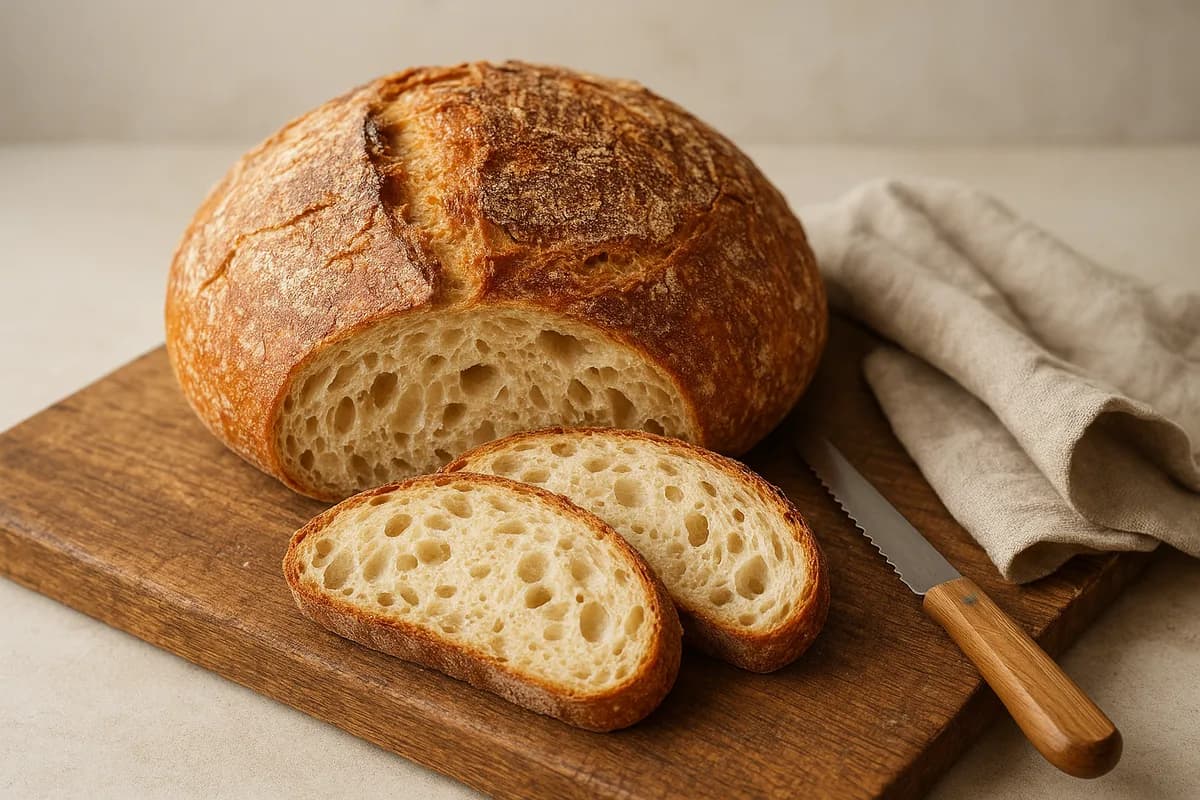
Artisan No-Knead Bread is a rustic loaf made with flour, water, yeast, and salt. It bakes up with a crispy crust and airy, tender crumb—no kneading required, perfect for beginners. This simple, dairy-free artisan bread is ideal for soups, sandwiches, and everyday home baking.
Calories: 150 kcalProtein: 4 gCarbs: 31 gFat: 1 g
Prep30 Minutes Active, Plus 8–12 Hours Rising
Rise/Proof13 Hours
Bake40 Minutes
Servings12
DifficultyEasy
Ingredients
Baker's Essentials for this Recipe
Shop the gear that makes this recipe easier to bake.
Steps
- In a small bowl, heat 100 ml of the water to 38–43°C (100–110°F). Stir in the instant yeast and let sit for 5–10 minutes until foamy on top.
- In a large mixing bowl, whisk together the bread flour and whole wheat flour until evenly combined. Sprinkle in the salt and whisk again so it is well distributed through the flour.
- Pour the foamy yeast mixture and the remaining 250 ml room-temperature water into the flour mixture. Stir with a sturdy spoon or spatula for 2–3 minutes, until a shaggy, sticky dough forms and no dry flour remains; the dough should feel tacky and rough.
- Cover the bowl tightly and let the dough rise at 24–27°C (75–80°F) for 8–12 hours (or overnight), until doubled in volume, very bubbly on the surface, and jiggly when the bowl is gently shaken.
- Lightly flour a work surface with a small pinch of bread flour. Use a dough scraper or spatula to gently release the dough from the bowl onto the surface. With floured hands, gently stretch one edge of the dough up and fold it toward the center; repeat all around the dough 8–10 times until it forms a rough ball. The dough should feel elastic, soft, and quite sticky.
- Place the dough seam-side down back into the bowl. Cover and let rest for 15 minutes at room temperature to relax the gluten.
- Place a heavy Dutch oven with its lid into the oven and preheat to 220°C (425°F) for at least 30 minutes so the pot is thoroughly heated.
- While the oven heats, lightly flour the work surface again. Gently shape the dough into a tight ball by tucking the edges under, trying not to deflate it. Transfer the dough onto a square of parchment paper, seam-side down. Cover loosely and let rise 30–45 minutes at 24–27°C (75–80°F), until slightly puffed; when gently pressed, the indentation should slowly spring back.
- Carefully remove the hot Dutch oven from the oven and take off the lid. Using the parchment as a sling, lift the dough and lower it into the pot. If desired, use a sharp knife or lame to slash the top. Cover with the lid and return to the oven. Bake for 30 minutes.
- Remove the lid and continue baking for 10–15 minutes, until the loaf is deep golden-brown, the crust looks very crisp, and the bottom sounds hollow when tapped. For extra certainty, the internal temperature should read about 96°C (205°F) on an instant-read thermometer.
- Lift the bread out of the pot using the parchment and transfer it to a wire rack. Cool completely at room temperature for at least 1 hour before slicing. The interior crumb should be airy with irregular holes and a tender, slightly chewy texture.